

Introduction
Medical authorities have officially initiated a major shift in women’s health terminology: PCOS is being renamed PMOS. For decades, polycystic ovary syndrome was viewed primarily as a reproductive issue centered around ovarian cysts. According to a landmark international expert consensus published in The Lancet and endorsed by the Endocrine Society, medical specialists now recognize that this classification fails to capture the true scope of the condition.
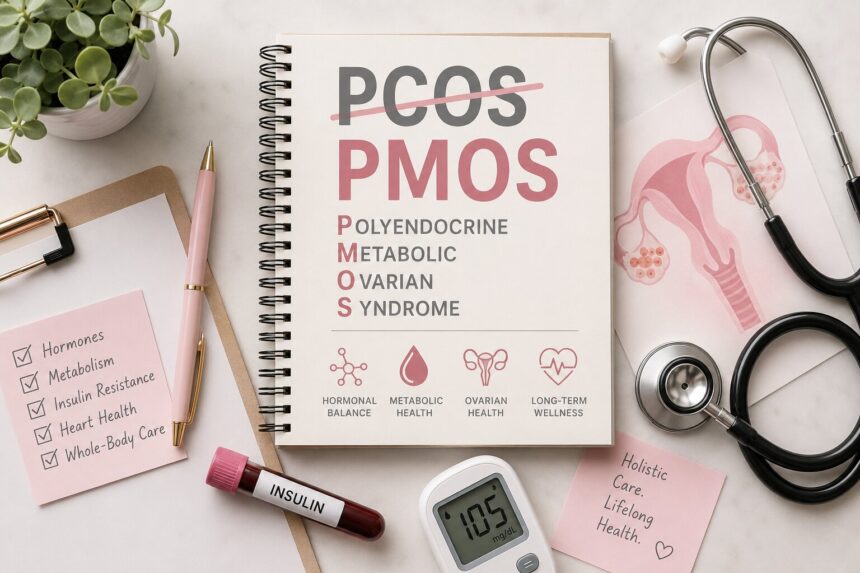
The new terminology—Polyendocrine Metabolic Ovarian Syndrome (PMOS)—reflects a fundamental update in how healthcare providers understand, diagnose, and treat this complex condition. While your current medical care will not change overnight, this transition marks a critical turning point toward comprehensive, lifelong care for millions of women worldwide.
Why Is PCOS Renamed PMOS?
The original name, polycystic ovary syndrome, has long been a source of confusion for patients and clinicians alike. The word “polycystic” suggests that a woman must have fluid-filled sacs on her ovaries to receive a diagnosis. In reality, many individuals with the condition never develop ovarian cysts, while others without the disorder may have benign cysts.
Reproductive endocrinologists at Yale Medicine emphasize that shifting to PMOS moves clinical focus from a “microscopic” view of the ovaries to a “telescopic” view of full-body health. The renaming directly addresses these limitations by shifting focus away from a single organ and toward the broader hormonal and metabolic disruptions that drive the condition.
The Problem With the Old Terminology
Focusing exclusively on the ovaries creates several diagnostic and treatment challenges:
- Delayed Diagnoses: Patients without visible ovarian cysts are frequently overlooked or misdiagnosed.
- Narrow Treatment Plans: Standard care often focuses only on regulating menstrual cycles or restoring fertility rather than addressing underlying metabolic risks.
- Misaligned Patient Expectations: The old label implies that the issue resolves after menopause or when pregnancy is no longer desired, which is factually incorrect.
What Does PMOS Stand For?
The updated name, Polyendocrine Metabolic Ovarian Syndrome, systematically breaks down how the condition actually operates inside the human body:
- Polyendocrine: Indicates that multiple hormone-producing glands throughout the endocrine system are involved, rather than just the ovaries.
- Metabolic: Highlights the central role of insulin resistance, glucose regulation, lipid imbalances, and cardiovascular risk factors.
- Ovarian: Acknowledges the continued importance of ovarian health, irregular ovulation, and reproductive symptoms.
- Syndrome: Recognizes a collection of interconnected symptoms that vary significantly from person to person.
Academic health systems like Johns Hopkins Medicine and UCLA Health note that insulin resistance and cardiometabolic risks remain primary drivers requiring lifelong monitoring. This multi-layered definition encourages doctors to view the disorder through a wide-angle lens rather than focusing on a single symptom.
How PMOS Impacts Long-Term Health Across Your Lifespan
One of the most vital reasons PCOS was renamed PMOS involves long-term wellness. While reproductive symptoms like irregular periods or fertility struggles often take center stage in a patient’s twenties and thirties, the underlying metabolic drivers persist throughout life.
As women age, reproductive signs may lessen, but metabolic risks frequently increase. Left unmanaged, these underlying factors can elevate the risk of several chronic health issues:
- Type 2 Diabetes: Insulin resistance affects a significant majority of individuals with the condition, independent of body weight.
- Cardiovascular Disease: Abnormal lipid profiles, higher blood pressure, and vascular inflammation demand ongoing monitoring.
- Endometrial Changes: Infrequent ovulation can lead to prolonged uterine lining thickening, requiring proactive preventive management.
- Metabolic Health Alterations: Fluctuations in metabolic rate and energy regulation require tailored nutritional strategies.
What the Name Change Means for Existing Diagnoses
If you previously received a diagnosis of PCOS, your medical status remains entirely valid. You do not need to seek a new evaluation or request updated documentation immediately.
The rollout of the term PMOS will take place gradually across global health systems. Insurance codes, clinical charting software, and formal diagnostic criteria will transition over several years. During this period of adoption, medical providers may use both terms interchangeably.
Key Takeaway: Your existing treatment plan, prescriptions, and specialist referrals remain active. The primary evolution lies in how your healthcare team monitors your overall metabolic wellness over time.
Worth exploring: This Book Showed Jenna Johnson How to Put Herself First
How to Advocate for Your Health at Your Next Appointment
Because the transition from PCOS to PMOS emphasizes holistic healthcare, your routine visits should extend beyond cycle tracking. Preparing targeted questions can help ensure your provider evaluates your full endocrine and metabolic profile.
Consider discussing the following topics with your physician:
- Metabolic Panels: Request regular fasting blood glucose, HbA1c, and lipid panel screenings.
- Insulin Resistance Assessments: Inquire about tests that evaluate how efficiently your body processes insulin.
- Cardiovascular Risk Screening: Monitor blood pressure trends and discuss long-term heart health strategies.
- Comprehensive Lifestyle Guidance: Seek personalized advice regarding nutrition, resistance exercise, and stress management tailored to metabolic health.
FAQs
Will my insurance still cover my treatment if my records say PCOS instead of PMOS?
Yes. Insurance companies and medical billing systems rely on standardized medical diagnostic codes. The transition to PMOS will be updated in official administrative databases over a multi-year period, ensuring your coverage remains uninterrupted.
Does the name change mean there are new medications available for PMOS?
While the renaming itself does not instantly introduce new pharmaceuticals, it encourages clinicians to utilize metabolic treatments—such as insulin-sensitizing therapies and targeted lifestyle interventions—earlier in the management process rather than relying solely on hormonal contraceptives.
Are ovarian cysts still part of the diagnostic criteria for PMOS?
Ovarian ultrasound markers remain one of several diagnostic factors, but they are not strictly required for every diagnosis. The shift to PMOS reflects the understanding that metabolic and hormonal markers are equally crucial diagnostic indicators.
More stories worth exploring: Can One Book Rebuild Your Life the Way It Did for Joan?
Conclusion
The evolution from PCOS to PMOS represents a significant victory for modern medicine and patient advocacy. By replacing a restrictive label with terminology that encompasses the full scope of hormonal and metabolic health, healthcare providers are better equipped to deliver personalized, lifelong care. While official administrative changes will take time to roll out completely, this updated understanding empowers patients to seek comprehensive health evaluations that protect their well-being far beyond their reproductive years.
Source: Yale Medicine. Read the original article here: Yale Medicine – PCOS Is Renamed PMOS